Friday, March 21, 2014

Nick Rowe's example from 'The sense in which the stock of money is "supply-determined"'

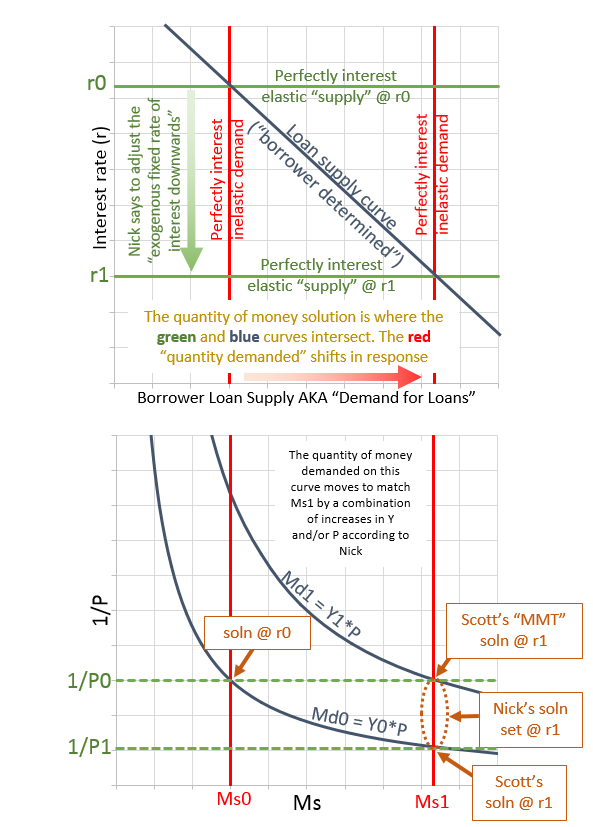
Figure 1: Diagram of Nick Rowe's example

In a post from Nick Rowe regarding the sense in which the stock of money is "supply-determined" he sketches out an example with the following definition for the money demand function:
Md=L(P,Y)=PY
He also mentions that:
By cutting the rate of interest, the central bank increases the quantity of loans from the central bank, which creates more money. Eventually P and/or Y will increase and the quantity of money demanded will increase in proportion to the quantity created.
Figure 1 is my attempt to sketch out what this example looks like. The items with "0" indicate the original values prior to the central bank's exogenous cut in interest rates from r0 to r1. Keep in mind that the central bank (CB) is the ONLY bank in this example: there are no commercial banks, and it only loans cash (so no deposits at all in this world) and it is compelled to lend to anyone because they are all good credit risks. I'll also assume that the bank is compelled to sell back to each individual borrower their debt on a dollar for dollar basis at the discretion of the borrower. Some of these assumptions may not be important for the logic of the post though!

Note that the blue downward sloping curve in the upper plot is the "supply curve for loans determined by borrowers" which Nick states is equivalent to "demand for loans by borrowers" in "normal language." He points this out in the comments in his previous post. Also note Md0 corresponds to Y0 and Md1 corresponds to Y1 (if P did not change from P0). However, it's possible also that Y does not change from Y0 and P instead changes from P0 to P1. In fact Nick implies that either or both P and Y could increase in this case which gives us the set of solutions for 1/P lying between the two blue money demand curves (Md0 and Md1) along the red supply curve on the right (Ms1).

Scott Sumner thinks that Nick must mean that where Md0 and Ms1 cross is the solution. He also claims that the MMT people would say that the solution is where Md1 and Ms1 cross. I think Nick is actually saying it can lie anywhere between those extremes.

Also note that in the upper plot the two horizontal green solid lines are the "perfectly-elastic supply functions" for money (each at a fixed interest rate, r0 and r1), and that the two vertical red lines in the upper chart are the two "perfectly interest inelastic" demand curves for  money. Assume the red vertical line on the left is Md0 and that it has already reached equilibrium to match the supply of money (Ms0 in the lower chart). After r is lowered from r0 to r1, then Ms0 goes to Ms1 in accordance with the borrower determined supply for loans curve in the upper plot. Then *eventually* the demand curve for money in the upper plot (still perfectly interest inelastic, and thus vertical) will move right to match the supply curve (Ms1) in the lower plot.

One more thought on the upper plot (with the CB "exogenously" determined interest rate on the y-axis). The solution where the downward sloping blue curve (borrower determined supply curve for loans) intersects the horizontal green "perfectly interest-elastic 'supply' curves for money." I've already noted how in "normal language" (according to Nick) the "supply curve for loans" is called "demand for loans." However, it's better described as a supply curve. But then we have two supply curves intersecting. But then it occurred me to make the following linguistic substitutions, and I think it all becomes a lot more clear:

Replace "loans" with "bonds."
Replace "borrowers" with "bond issuers."

Then the blue line's name makes more sense as a supply curve as we've noted. But also, the horizontal "supply for money" curves instead become "perfectly interest-elastic *DEMAND* curves for bonds at exogenously fixed rates of interest." So then we're back to quantity being determined in the usual way by a supply curve intersecting a demand curve. Hurray! I comment on that here on Nick's post.

The red perfectly interest-inelastic vertical demand for money curves in the upper plot do NOT determine the quantity of money, and instead follow the solution determined by the other two curves.

Note: Scott Sumner suggested in a comment that instead of 1/P on the y-axis in the lower plot, I should instead plot 1/NGDP = 1/(P*Y). If I did this, then there would only be a single downward sloping (rectangular hyperbola) blue Md curve and the solution set of Nick Rowe at Ms1 would collapse to a single point on that curve. I.e. Scott's solution and the "MMT" solution would be indistinguishable (which would probably not please Scott!).

Note that in the upper plot, the x-axis could be labeled "Quantity of loan-principal demanded/supplied (measured in dollars)."

With this later comment, Nick Rowe essentially establishes his solution set at r1 (in Figure 1's lower plot) to be the entire red ray labelled "Ms1"... it would be the small line segment if P and Y were precluded from decreasing.

Tuesday, March 18, 2014

Nick Rowe vs Scott Sumner: Different Answers to a Simple HPE Hypothetical

Figure 1: Nick Rowe's and Scott Sumner's solutions for P

This is a simple hypothetical that I feel get's to the core of concepts like the long term neutrality of money, the quantity theory of money (QTM), and the hot potato effect (HPE) which undergird much of Market Monetarist (MM) thought. If I'm not mistaken, Nick Rowe seems to think my hypothetical is a case where those concepts don't work, while Scott disagrees. Why do I care? Well if they don't work here, then what about our real situation does make them work? How can we be certain that they are indeed working, and if they are how do we know they are completely working?

Setup: This is basically the same as Scott Sumner's "cashless society" hypothetical (case 7) except with the added stipulation that there's just one commercial bank and that the reserve requirement is 0% (Scott didn't specify the number of commercial banks or the reserve requirement). In particular, we have:
  1. Cashless society (no paper reserve notes and no coins).
  2. A central bank (CB) which can buy and sell assets (open market operations (OMOs)).
  3. A single commercial bank with a CB deposit (i.e. reserve deposit). This is the only existing CB deposit account.
  4. The reserve requirement is 0%.
  5. A non-bank private sector which holds deposits at the commercial bank.
Scott points out that in such a case base money consists only of bank reserves (as there's no cash) and thus reserves alone are the medium of account (MOA)*. Now for some important definitions:
P = average steady state price level in the private economy
Ms = reserve supply
Mdn = nominal reserve demand
Mdr = real reserve demand = Mdn/P
Scott Sumner and Mark A. Sadowski say that if Ms changes (e.g. through CB OMOs), then P will change in proportion. Nick Rowe says that in this case demand for reserves will change with Ms. Specifically he noted that if Ms goes to zero then demand for reserves will go to zero. If we take this to mean that demand is proportional to Ms, then P stays fixed regardless of the change in Ms.

The difference between Nick's and Scott's solution is illustrated in Figure 1 for two different values of Ms: we're assuming they start off the same at Ms = Ms0, but then the CB sells assets such that Ms = Ms1. The demand curve (Mdn) in Nick's case scales in proportion to Ms (this is accomplished by scaling Mdr). Nick Rowe says that my Figure 1 looks roughly right. Click here to see an animation.

My question for Nick is what is preventing the long term neutrality of money in this case? What would I need to change about my example, aside from adding cash, for him to agree with Scott? For example, would adding multiple commercial banks do it? Something else? What's the minimum change required?

Relating my hypothetical back to reality, is it really so outlandish to consider the case of a single commercial bank? Mark Sadowski identified a case in France in which the banks were nationalized, and he notes with little effect. In terms of a cashless society, Mark is convinced we'll still have cash a hundred years from now, but Scott agrees it is going away at some point. I believe Canada looked into the consequences of going cashless. But even if Mark is right and cash is here for the long haul, does it really make much of a difference? Isn't it just an arbitrary choice by the depositor about which form to keep his money in? (Mark & Mishkin agree it's the "depositor's choice.") Does it really affect the long term neutrality of money, the QTM and the HPE?

*Although only reserves are MOA, I think both Scott & Nick would agree that both reserves and commercial bank deposits are a medium of exchange (MOE) in this case.

For those wishing to see the above change in Ms sketched out in balance sheets, look here.

Additional notes and links can be found here (warning: redundant and unorganized!)

Although I compiled a more succinct history of this question here, (a copy here) and the question itself has been brought up again here and here. Also, I discuss the history of a preceding related question here (in which the CB buys up the commercial banks).

Monday, September 30, 2013

Reponse to Odie

Odie, you wrote:

"Instead it will be income for the bank which it will use to pay e. g. one of its employees by crediting its account. No money being created are destroyed there, simply shifting funds around. For those $1200 the bank's deposit liabilities stay the same. (More maybe later)"

http://worthwhile.typepad.com/worthwhile_canadian_initi/2013/09/if-banks-bought-houses.html

I agree with everything in your comment up until that part!

There's two separate and completely independent IOUs at play here between you and the banking system in aggregate: Your IOU to them (the mortgage) and their IOU to you (your deposit). You are each others creditors and debtors. If you pay $2000 to them with your deposit, that is accomplished by them debiting your deposit account. Now it so happens that $800 of that payment is principal, so it also affects your IOU to them, so they mark that IOU down by $800 for that. Your mortgage though is not a medium of exchange and thus it is not "inside money." $2000 of inside money was destroyed in this example: $800 of your IOU was also destroyed for a net gain by the banks of $1200 of equity (the abstract dollar amount of the value of assets in excess of the value of liabilities). They have no obligation to turn around and create more inside money by crediting other people's or entities'  bank deposits with $2000 or $1200 or any other amount. There's no law of the preservation of bank deposits. You and I can't destroy bank deposits because to us bank deposits are "outside money." "Inside" and "outside" are relative terms. Relative to non-bank private entities, bank deposits are outside. Relative to the private sector (the usual vantage point from which to define "inside" and "outside") they are "inside." If we included the Fed in our vantage point, then Fed created money (reserve notes and Fed deposits) would also be "inside" and only coins and the extremely rare "US notes" would remain "outside." If you and I write out our own IOUs and use them as money, then we CAN destroy those and that "money" would be "inside" us.


Friday, September 13, 2013

Equation Test


λb0 λb0 λb0

λ<sub>b0 </sub>λ<sub>b0</sub> λ<sub>b0</sub>

$\Delta$ 

Another equation test, this time from this blog:
http://informationtransfereconomics.blogspot.com/2014/03/the-islm-model-again.html?showComment=1396510569711#c5498535460855094305

$$
r = \frac{1}{\kappa} \; \frac{\langle I\rangle}{M_{0}}
$$


ΔIIIref=I0κlogMMref


$$ r = \frac{1}{\kappa} \; \frac{\langle I\rangle}{M_{0}} $$


$$ K_{h,g'} = \frac{1}{\theta}$$
$$ K_{y',g'} = \frac{1-\theta}{\theta}$$


$K_{h,g'} = \frac{1}{\theta}$


$K_{y',g'} = \frac{1-\theta}{\theta}$

How about in the middle  $K_{h,g'} = \frac{1}{\theta}$ of a sentence?


(1) r=dIdM=1κIM

Answer for Macroman

macroman, I’m with you up to here:
“It is these reserves that the banks can then use to lend out money or do with it whatever they please.”
1. If you’re talking about banks lending reserves to each other (which I’m pretty sure you’re not) then this is correct. Since reserves are defined as base money HELD BY THE BANKS, you can see how this is true. Yes banks loan each other base money:
“MB: The total of all physical currency plus Federal Reserve Deposits (special deposits that only banks can have at the Fed). MB = Coins + US Notes + Federal Reserve Notes + Federal Reserve Deposits.”
2. If you’re talking about something else, this is not true. About the closest thing you could say that IS true is that a cash advance is a loan of base money in the form of “physical currency.”
“Because the federal reserve does not have to have the MONEY on hand to buy the bond, but rather can use a made-up reserve, it is the equivalent of printing money.”
Check this out:
http://brown-blog-5.blogspot.com/2013/08/banking-example-41-quantitative-easing.html
Notice how reserves flow out of the Fed, and assets flow in, in equal proportion.
As for the rest of your email, check this out:
http://brown-blog-5.blogspot.com/2013/08/banking-example-11-all-possible-balance.html
Especially the balance sheets at the bottom: “Public (simplified)” and “more simpflified.” Especially this bit:
public’s stock of money = L + B + F = bank deposits + cash
It’s the “F” part you’re worried about. But the thing to keep in mind though is that this does NOT affect the public’s equity!
public’s equity = T
QE changes the composition of the public’s stock of money, but has NO effect on the public’s equity.

Friday, September 6, 2013

Trash

Below is a test reply comment to Fed Up and winterspeak in JKH's post on Market Monetarism. My original posted comment is here, but as of this writing it's "awaiting moderation" (I'm sure because there's more than one link in it), but it still let me grab a link to it, so it'll be interesting to see if people can see the original even though it's awaiting moderation.
----------------------------------------------------------------------------------------------------------------------------

 Fed Up & winterspeak,
“Tom Brown, does this sound familiar?” — Fed Up
Yes, this sounds very familiar, which is why I posted a link to my post “Nick vs Scott” on this subject above. And Nick’s response above again highlights a difference with Scott. Let’s review: Scott Sumner, in this post explaining the hot potato effect (HPE), used as an extreme example under which the HPE still applied a “cashless economy” (his case 7):

7. Now let’s assume a cashless economy where the MOA is 100% reserves. Still no change; reserves are still a hot potato.
Using Scott’s hypothetical case 7 a basis, I asked Scott and Mark Sadowski the following question:

OK, let’s start with your own example #7 from this post:
http://www.themoneyillusion.com/?p=23314 “7. Now let’s assume a cashless economy where the MOA is 100% reserves.”
You’ve clearly identified the MOA there: reserves. Banking doesn’t matter, so why not assume a single commercial bank? And my other assumptions: no taxes, gov spending, foreign trade, etc.
So if initially the CB buys $X in assets, this gives us an initial $X in reserves, which you’ve identified as MOA.
Since we have an MOA, we will reach a steady state price level, P, right?
Now what if the CB sells 1-epsilon of its assets? The new eventual price level should be:
new steady state price level = P*(epsilon*X/X) = P*epsilon
So as epsilon approaches zero, the new steady state price level should approach zero too??
At which point I added

Scott, of course the reserve requirement = 0% too.
Scott’s response was:

Tom, Yes, as the level of reserves go to zero, so does the price level.
Mark Sadowski agrees with Scott, although he complains about the realism of my (actually Scott’s!) hypothetical cashless society:

Tom Brown,
I agree with Scott. However, any example that doesn’t include currency is excluding what has been the most important part of the monetary base historically. In short it is extremely unrealistic.
This is quite different than what Nick writes above:

If there were just one commercial bank, and if nobody used central bank currency, and if there were no legally required reserves, then that single commercial bank would not need to hold any reserves. That single commercial bank could ignore the central bank. The central bank would disappear.
Nick wrote nearly the same thing when I first presented him with my version of Scott’s hypothetical, however after showing him Scott’s response, he wrote this:

Tom: you really do need to distinguish between the *demand* for reserves going to zero and the *supply* of reserves going to zero. (And *both* supply and demand going to zero.) I read you one way, and Scott read you the other. It’s supply AND demand.
He also later saw my notional chart (animated version here) of my interpretation of what he meant by this and wrote:

Tom: thanks. looks roughly right on a first glance.
though to be fair, the version he saw was slightly different, but not substantially so (embedded in the comments here).

Tuesday, September 3, 2013

Sumner's HPE Explanation

http://www.themoneyillusion.com/?p=23314

Geoff's comment:

http://pragcap.com/the-banking-camp-vs-the-macroeconomics-camp/comment-page-1#comment-153314

"If somebody gives me, say, $500 in cash but my wallet is already full, then I’m going to do something else with it. I might spend the cash on real stuff or convert it to another kind of financial asset like a bond or stock. That’s the HPE in action, right?
But there is only one problem. The Fed can’t just give me $500 in cash. All they can do is buy an existing financial asset from me (aka an asset swap).
I know Dr. SS understands this. So what am I missing?
PS I agree with your post, Cullen. Sorry for going O/T :)"

Geoff, I agree that's a problem. Just giving you the $500 is what the MMists call a "Helicopter Drop."

But what Scott's saying in his gold analogy, the difference between cases 3. and 4. is that gold is the MOA in 4 and prices are "'sticky" (meaning they don't move instantaneously).

Therefore in case 3, the price of gold drops in half instantly. That's still the HPE. In case 4 this happens more gradually, and what changes instantly are things like "interest rates."

Make sense?

BTW, to comment easily select "Name/URL" then you can put any URL you want in there, including www.google.com